
CONTRADICTION: HOW NICKI MINAJ TRADED HER VOICE FOR A TRUMP CARD
CONTRADICTION: HOW NICKI MINAJ TRADED HER VOICE FOR A TRUMP CARD
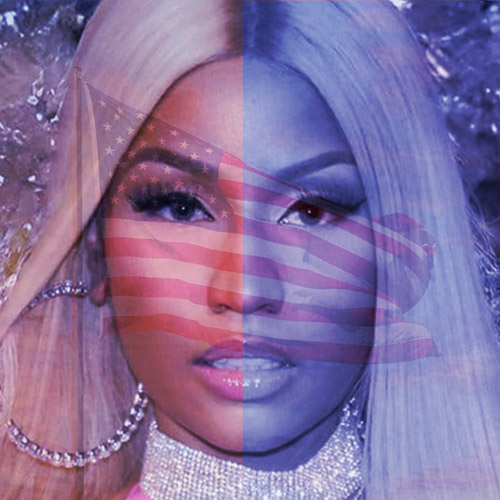
There's a photograph circulating online that tells you everything you need to know about 2026. In it, Nicki Minaj—born Onika Maraj in Trinidad and Tobago, immigrated to America at just 5-years-old, and the self-proclaimed former "illegal immigrant"—beams as she holds a gold card emblazoned with Donald Trump's mug. The caption? "Free of charge."
The card represents "fast-track citizenship" through Trump's Gold Card program, which typically requires a $1 million payment to the federal government plus a $15,000 processing fee. For Minaj, it appears she's getting the express lane without paying a dime—as if she couldn't afford it. Meanwhile, millions of immigrants—many who came to this country under similar circumstances as the rapper—wait years, sometimes decades, in backlogged queues, scraping together fees they can barely afford, hoping for even a fraction of the access Minaj has been handed.
But Nicki minaj's situation isn't just about hypocrisy, it's about selective amnesia. And it's particularly worth examining what Minaj has “chosen to forget”. Trump’s Gold Card program proves it was never about illegal immigration concerns, not really, it was about racism – and white supremacy. If you can perform, pay, and in some cases humiliate yourself, you’ll have no problem.
Who We Thought She Was
Let's rewind this back to 2018. Minaj saw images of children being separated from their parents at the U.S.-Mexico border under the Trump administration initial immigration policy. Her response was raw, swift and direct.
"I came to this country as an illegal immigrant at 5 years old," she wrote on Instagram. "I can't imagine the horror of being in a strange place & having my parents stripped away from me at the age of 5. This is so scary to me. Please stop this."
She continued: "Can you try to imagine the terror & panic these kids feel right now? Not knowing if their parents are dead or alive, if they'll ever see them again."
At a 2020 conference, she was even more explicit about her stance. "I get that a lot of people don't like him for obvious reasons," Minaj said of Trump. "But what stuck with me was the children being taken away from their parents when they came into this country."
That Nicki Minaj felt something profound. She connected her own immigrant experience to the suffering of others. She used her massive platform—one built largely on the support of LGBTQ+ fans, people of color, and progressive young people—to speak truth to power.
That woman is long gone.
The Price of Access
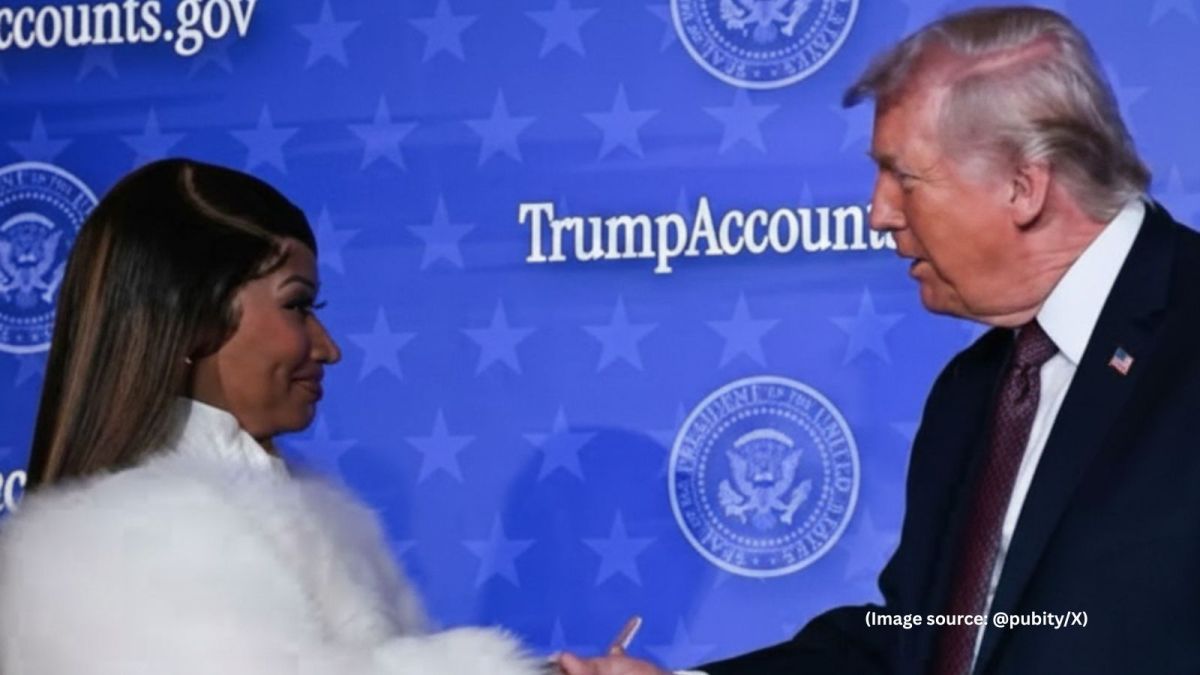
Now let us fast forward to January 2026. Minaj stands on stage at the Treasury Department's Trump Accounts Summit—an event promoting government-supported investment accounts for babies—and declares herself Trump's "number one fan."
"The hate or what people have to say, it does not affect me at all," she told the crowd. "It actually motivates me to support him more. And it's going to motivate all of us to support him more."
Hours later, she posted that photo of the Trump Gold Card. Then came the confirmation: she's finalizing her citizenship paperwork. No million-dollar payment. No years of waiting. Just proximity to power and a willingness to perform loyalty on command.
The White House even amplified her moment, reposting her photo with the words "oh she's super BASED."
Let's be clear about what happened here: A wealthy entertainer who has lived in the United States for nearly four decades, who has paid millions in taxes, who has built an empire on American soil, was given preferential treatment to secure citizenship—not through the legal channels available to everyone else, but through a program designed for the ultra-rich, waived especially for her after she publicly pledged fealty to a president whose immigration policies she once condemned.
This isn't citizenship. It's a transaction.

So What Changed?
Minaj's apologists will argue that she's playing chess, not checkers. That she's securing her personal future by protecting herself and her family. There's speculation that her support for Trump might be connected to her husband Kenneth Petty's legal troubles—he's a registered sex offender—or her brother Jelani Maraj's incarceration for predatory sexual assault – both a strange connection to Minaj.
Others suggest she's simply evolving politically, that people do actually change their minds, that she's entitled to support whoever she wants.
Okay. People do and can change. But authentic evolution requires honesty, and Minaj has offered none to date. She hasn't specifically explained why the children being ripped apart from their parents in 2018 no longer tug at her conscience today. And she certainly hasn't addressed how she reconciles her own story of arriving as an undocumented immigrant child, through no fault of her own, with her support for an administration that has ramped up deportations and family separations to historic levels.
Instead, Minaj has chosen spectacle over substance. At the recent Turning Point USA AmericaFest convention, she sat down with Erika Kirk—widow of conservative podcaster Charlie Kirk—and offered gushing praise for Trump and Vice President JD Vance. She called Trump "handsome" and "dashing." She said both men have "a very uncanny ability to be someone that you relate to."
She also made transphobic comments, telling the crowd: "If you are born a boy, be a boy. There's nothing wrong with being a boy."
This from a woman whose career was built on the backs of LGBTQ+ fans—the "Barbz"—who championed her through every controversy, every album roll-out, every social media feud. Many of those fans are now speaking out, feeling betrayed, fooled, and abandoned.

The Privilege of Convenience
For many, here's what makes Minaj's story particularly galling: for decades, she operated in a legal gray zone. She was not a U.S. citizen, likely holding permanent residency status, but she never bothered to naturalize through the standard process available to millions of other immigrants. She traveled freely, earned astronomical sums of money, and enjoyed all the benefits of American life without the responsibilities of citizenship—including the inability to vote.
In 2024, during a TikTok livestream, she revealed this reality with barely concealed resentment. "I'm not a citizen of America. Isn't that crazy?" she said. "You would think that with the millions of dollars that I've paid in taxes to this country that I would have been given an honorary citizenship many, many, many thousands of years ago."
The entitlement in that statement is breathtaking. Citizenship isn't a reward for wealth. It's not something you purchase with tax contributions or celebrity status. It's a legal process rooted in commitment, understanding of civic responsibility, and integration into the American community. Millions of hardworking immigrants—nurses, teachers, construction workers, small business owners—pay taxes too. They don't expect "honorary citizenship" in return. They go through the proper channels, study for the naturalization exam, take the oath, and become Americans the right way.
But for Minaj, that process was apparently beneath her—until she found a shortcut that came with a photo op and a gold card.
The Immigrants Left Behind
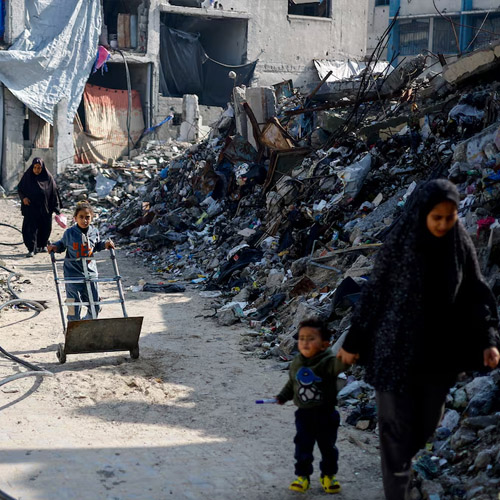
While Minaj celebrates her free fast-track to citizenship, consider the immigrants who don't have access to the Trump Gold Card program:
-
The Dreamer who was brought here as a child, just like Minaj, but whose parents couldn't afford a green card lawyer and who now lives in legal limbo under DACA.
-
The nurse from the Philippines who has been waiting eight years for her green card application to be processed, separated from her children back home.
-
The Mexican farm-worker who picks the food on American tables, pays taxes through an ITIN number, and has no path to legal status at all.
-
The Afghan interpreter who risked his life helping U.S. troops and is still stuck in the Special Immigrant Visa backlog.
These people didn't get gold cards. They didn't get invited to White House events. They're not "super BASED" according to Trump's social media team. They're just trying to survive in a system that has been deliberately designed to favor wealth and proximity to power.
And now they have to watch someone who came here under nearly identical circumstances—someone who once claimed to understand their fear—cut the line because she was willing to perform for a president who has built his political brand on demonizing people who look like her, who came from countries like hers, who are trying to build lives just like she did.

The Betrayal is Personal
A Change.org petition calling for Minaj's deportation to Trinidad has surpassed 60,000 signatures. While the petition carries no legal weight—deportation requires specific legal grounds, and Trump's administration certainly won't target one of his new celebrity supporters—the symbolism is striking, and hypocritical.
"I'm from Trinidad, and I'm tired of Nicki Minaj using Trinidadian identity when it suits her while embarrassing the culture on a global stage," one commenter wrote on the petition.
Former fans are speaking out across social media. "I'm so embarrassed to say she's from my country," wrote one Instagram user. Another said simply: "Never was a fan."
Perhaps most tellingly, the "Barbz"—Minaj's famously fierce and protective fanbase—have gone unusually quiet. "Crazy part is I've never seen the Barbs this quiet when it comes to her like EVER," one person noted. The responses? "Embarrassed."
This silence speaks volumes. For years, the Barbz defended Minaj against every criticism, every rival, every perceived slight. But this? This is harder to defend. Because this isn't about music or creative choices or personal drama. This is about values. This is about who you are when the cameras aren't rolling and who you're willing to abandon when it's convenient.
A Broader Symptom
Minaj's transformation isn't happening in a vacuum. We're living through an era where celebrity and proximity to power have become their own form of currency, where influencers trade moral clarity for access, where the right photo op can open doors that remain permanently shut for everyone else.
The Trump Gold Card program itself is a perfect distillation of this moment. It takes something that should be rooted in civic values—citizenship—and turns it into a luxury product. Pay a million dollars, skip the line, become an American. No need to learn about the Constitution or understand the responsibilities of citizenship. Just write a check.
And if you're famous enough, if you're willing to praise the president loudly enough, maybe you don't even need to write the check.
This is what happens when citizenship becomes transactional rather than aspirational. When it's something you can buy rather than something you earn through commitment and integration. When the rules apply to everyone except those with the right connections.
Minaj is just the most visible example. But she won't be the last.
What Ultimately She's Lost
Here's what Nicki Minaj has gained: a gold card, access to power, praise from the White House, and fast-track citizenship without the fees.
Here's what she's lost: the respect of fans who believed she stood for something, the moral authority to speak on immigrant issues ever again, and perhaps most importantly, a piece of her own story.
Because that five-year-old girl who came to America scared and undocumented? The one who cried out against family separation and begged Trump to "please stop this"? That girl deserved better than to be sold out by the woman she became.
Immigration in America has always been complicated, messy, and unfair to most immigrants. But it's never been as nakedly transactional as it is right now, with celebrity immigrants cutting deals while millions of others wait in line, following rules that certainly don't apply to everyone.
Nicki Minaj didn't just get a gold card. She traded her voice—the one she used to speak up for terrified children at the border—for preferential treatment. She traded solidarity with other immigrants for proximity to power. She traded her story for a photo op. And ultimately, she traded her soul.
Related News .
Stay updated with the most important events.