

HOW TRUMP'S POLICIES COULD REACH AMERICANS LIVING ABROAD
HOW TRUMP'S POLICIES COULD REACH AMERICANS LIVING ABROAD


For the nearly 5.5 million Americans living abroad, President Donald Trump's second term has introduced a succession of policy changes that are fundamentally reshaping what it means to be a U.S. citizen living outside of the country. From expanded travel restrictions to aggressive tariff regimes and unchanged tax burdens, expats find themselves caught in a perfect storm of challenges that are testing their financial stability, personal relationships, and even their loyalty to American citizenship itself.
The impact is showing up in stark numbers: nearly half of American expats are now seriously considering renouncing their citizenship—a 63% jump from just last year. The reasons why reveal a comprehensive policy failure that's pushing Americans abroad to make what was once an unimaginable choice.
THE TRAVEL BAN CRISIS: WHEN FAMILY TIES BECOME VECTORS OF SUSPICION
The most immediate threat to Americans abroad comes from Trump's dramatically expanded travel and immigration bans. What began as restrictions on 19 countries in June 2025 ballooned to 39 countries by January 2026, affecting nearly 20% of the world's nations. The scope is unprecedented, targeting primarily Muslim-majority, Black-majority, and Brown-majority countries across Africa, Southeast Asia, and the Middle East.
But in December 2025, the expansion took an especially cruel turn. The Trump administration eliminated three critical exceptions that had been included in the June ban: immediate relatives of U.S. citizens, children adopted abroad, and Afghan interpreters who risked their lives assisting American forces.
In defending the decision to bar U.S. citizens from sponsoring their own spouses, children, and parents for visas, President Trump declared that "familial ties can serve as unique vectors for fraudulent, criminal, or even terrorist activity." The statement effectively criminalizes the most fundamental of human connections.
For the 4.3 million immigrants from affected countries already living in the United States—including 2.4 million naturalized American citizens—the implications are devastating. Many cannot see family members living abroad. Those who travel internationally must worry whether new policies implemented during their absence could prevent their return.
A December 2025 policy from U.S. Citizenship and Immigration Services compounds the anxiety. The government is now re-reviewing immigration benefits granted to people from banned countries who entered the U.S. after January 20, 2021. This retroactive scrutiny means that even lawful permanent residents could face complications when trying to re-enter after traveling abroad.
The ban also includes Palestinians traveling on Palestinian Authority documents, affecting thousands of American families with ties to the West Bank and Gaza Strip. The administration cited "compromised vetting and screening abilities" resulting from recent conflict in the region.
THE SOCIAL COST: DEFENDING AMERICA FROM ABROAD
Beyond the legal barriers, Americans overseas are experiencing something more insidious: social isolation born of political embarrassment. From France to New Zealand, expats report a fundamental shift in how they're perceived.
"The moment they find out I'm American, the conversation changes," says Anthony Mucia, who has lived in Toulouse, France for six years. "Before this year, people would ask where I'm from and what brought me to France. Now the first question is, 'Are you glad to be in France now?' There's this look of shock or uneasiness, like it's automatically an embarrassing topic."
Jake Lamb, an American living in Auckland since 2023, reports that New Zealanders now joke about having to "hide" him or vouch that he's "one of the good ones" if Trump escalates conflicts with allies. The good humor, he believes, belies genuine wariness. "I am concerned that it may become difficult for some not to hold individual Americans responsible," Lamb said.
The awkwardness stems from Trump's sweeping disruption of the international order. His threats to annex Greenland and the Panama Canal, his withdrawal of funding from the World Health Organization, and his silencing of Voice of America on March 16, 2025 have fundamentally altered America's global standing. Sixty percent of expats believe America's international reputation declined after the 2024 election, and 54% say U.S. foreign policy toward their host countries has worsened.
For many Americans abroad, these daily interactions serve as painful reminders that they've become unwitting ambassadors for policies they neither support nor control. Sixty percent feel they don't have fair representation in the U.S. government—a sentiment that's driving many to consider the ultimate act of political divorce.
THE TARIFF SHOCK: WHEN AMERICAN WALLETS FEEL GLOBAL TRADE WARS
If the travel restrictions affect Americans with family abroad, Trump's tariff regime is hitting everyone's pocketbook—including those living overseas.
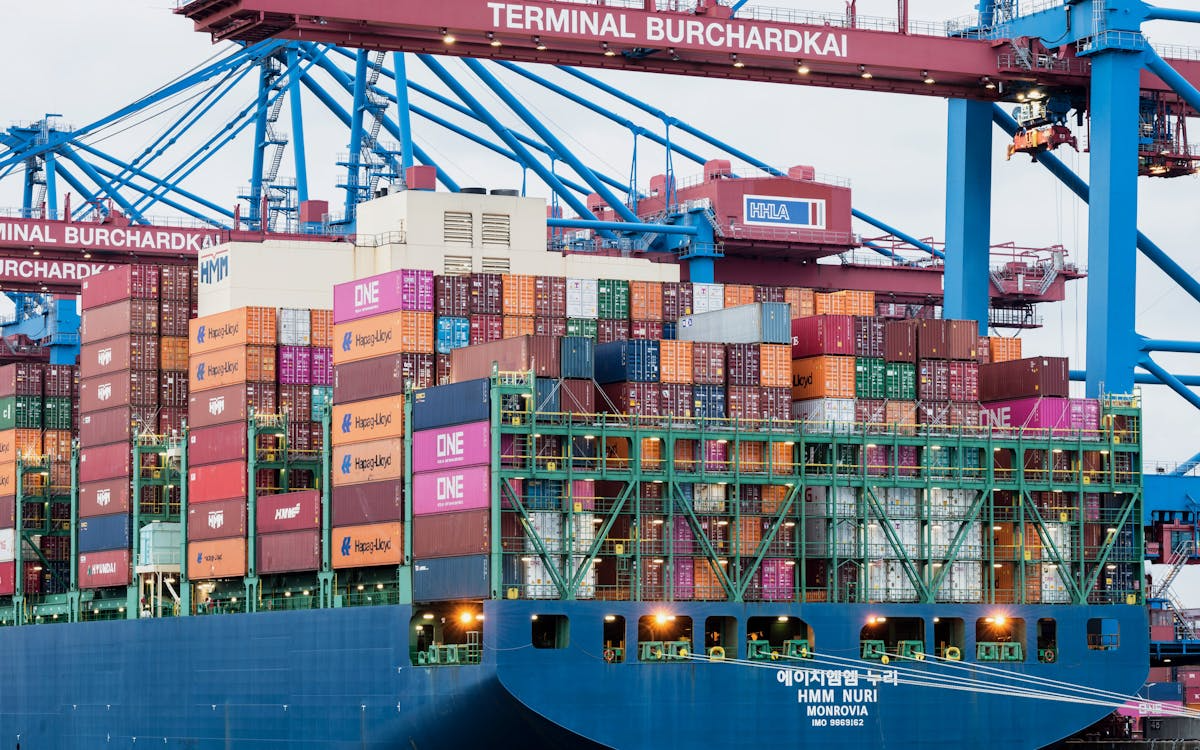
The numbers are staggering. Trump has imposed what experts call the largest trade policy shock in history: a minimum 10% tariff on virtually all trading partners, with rates climbing to 60% on Chinese goods, 50% on Brazilian and copper imports, 30% on European Union products, and varying rates on dozens of other countries. The average effective tariff rate has reached 9.9%—the highest since 1946.
For Americans living abroad, the tariffs create multiple financial pressures. First, they're driving U.S. inflation, which affects any dollar-denominated income or savings expats maintain. Consumer prices for imported goods rose 4% between March and September 2025, while domestic goods increased 2%. The Harvard Business School Pricing Lab documented sharp increases in categories Americans frequently purchase: toys, personal care products, clothing accessories, jewelry, and household appliances.
The Budget Lab at Yale University estimates the average cost to American households in 2025 at $2,400—effectively a hidden tax that's particularly painful for expats managing expenses in multiple currencies. And these costs are expected to rise in 2026 as retailers, having absorbed some tariff costs this year, pass more expenses to consumers.
For expats who import American goods to their host countries, the tariffs can make maintaining connections to home prohibitively expensive. For those who earn income tied to international trade—whether in manufacturing, logistics, or export businesses—the tariffs and resulting trade wars are destroying jobs and cutting incomes.
Global economic growth is projected to fall to 1.4% in the fourth quarter of 2025, down from 2.1% at the start of the year, according to J.P. Morgan Global Research. Corporate bankruptcies in the United States have reached their highest level since 2010, while job growth has slowed dramatically—just 584,000 jobs added in 2025 compared to 2 million in each of the previous two years.
The promised growth in manufacturing jobs that tariffs were supposed to deliver has not materialized. Instead, foreign governments have retaliated with their own tariffs on American exports, particularly agricultural products, leading to widespread farm bankruptcies partially mitigated only by Trump administration bailouts.
For Americans abroad who might consider returning home, the tariff-induced economic weakness makes that option less attractive. The unemployment situation is deteriorating: July 2025 saw only 73,000 jobs added, well below the 100,000 economists expected. Multiple economic research bodies are now predicting a possible U.S. recession, with some economists placing the odds at 90% by June 2025.
THE TAX TRAP: PROMISES MADE, PROMISES BROKEN
Perhaps the most bitter disappointment for Americans abroad comes from Trump's tax policies—or rather, the lack of meaningful reform.
During his 2024 campaign, Trump made history by becoming the first U.S. president to publicly support ending "double taxation" for Americans living overseas. He endorsed the Residence-Based Taxation for Americans Abroad Act, which would have allowed expats to opt out of the current citizenship-based taxation system that requires them to file U.S. tax returns on worldwide income regardless of where they live.
The promise generated enormous hope. The United States is one of only two countries in the world (along with Eritrea) that taxes citizens based on global income rather than residence. This creates nightmarish complexity for Americans abroad, who often must file tax returns in both their country of residence and the United States, navigate foreign account reporting requirements, and potentially pay thousands of dollars annually in compliance costs—even when they owe no actual U.S. taxes.
Then came the "One Big Beautiful Bill Act," signed into law on July 4, 2025. The legislation made the 2017 Tax Cuts and Jobs Act rates permanent, raised the Foreign Earned Income Exclusion to $130,000 for 2025, and removed a problematic Section 899 surtax. But it did nothing to address the fundamental burden of citizenship-based taxation.
The Residence-Based Taxation Act (H.R. 10468) introduced in December 2024 expired when the 118th Congress ended in January 2025. It has not been reintroduced, and there's no indication the administration is prioritizing it.
"The Big Beautiful Bill, like every previous effort at major tax reform, notably fails to deliver for US expats in any way," wrote tax experts at Moody's Private Client. "In fact, the bill arguably just made matters worse for Americans living abroad."
The continued tax burden is driving expats to desperation. A recent survey found that 83% of American expats find U.S. tax filing requirements stressful, and 86% feel their issues are less likely to be addressed by the government than those of stateside Americans. The Foreign Account Tax Compliance Act (FATCA), implemented in 2014, has only intensified the pressure by requiring foreign banks to report accounts held by U.S. citizens—leading many banks to simply refuse American customers rather than deal with the compliance burden.
THE RENUNCIATION WAVE: WHEN CITIZENSHIP BECOMES A LIABILITY
The cumulative effect of these policies is driving Americans to an extreme solution: giving up their citizenship entirely.
Annual renunciations have surged from an average of 200-400 cases before 2009 to 6,705 in 2020, with numbers remaining elevated ever since. Nearly 5,000 individuals officially renounced in 2024, and current trends suggest 2025 could exceed that figure.
The demographic profile is telling. Millennial and Gen X expats are most likely to renounce, at 60% and 54% respectively. Parents are particularly inclined: 71% of expat parents with children under 18 have considered renunciation, compared to just 31% of those without kids. These aren't disaffected loners making rash decisions—they're families thinking strategically about their children's futures.
The reasons extend beyond taxes. Following the 2024 election, 63% of expats said the results confirmed their decision to remain abroad. More than half cited dissatisfaction with the direction of the U.S. government as a top reason for considering renunciation.
The process isn't cheap or easy. The current fee to renounce U.S. citizenship is $2,350—one of the highest renunciation fees in the world. (A 2024 announcement that the fee would decrease to $450 has yet to be implemented.) Beyond the filing fee, renouncers must be tax compliant for five years, file Form 8854, and potentially pay an exit tax if they meet certain thresholds: more than $206,000 in average income tax or net worth over $890,000 as of 2025.
Yet Americans are paying these costs willingly. The majority of renouncers are long-time Americans living abroad—often for decades—who already hold another nationality. They've built lives overseas, raised families, and put down roots. For them, renunciation isn't protest; it's pragmatism.
"These are not people fleeing in anger or hiding wealth offshore," notes immigration law research from Boundless. "Most are ordinary Americans—parents, retirees, professionals—seeking relief from a tax and banking system that wasn't designed with global citizens in mind."

THE CONSULAR SERVICES CRISIS: ABANDONING AMERICANS ABROAD
The strain on Americans overseas is compounded by deteriorating consular services. State Department staffing has faced cuts and reorganizations, leading to massive backlogs for passport renewals, citizenship documentation, and emergency assistance.
Renunciation appointments themselves are backed up for months at many embassies and consulates. Americans seeking to give up citizenship—a process that must be conducted in person at a U.S. diplomatic post outside the United States—often wait six months to a year for appointments.
Meanwhile, those who need emergency assistance are finding the U.S. government increasingly unable or unwilling to help. The administration's September 2025 Executive Order creating a "State Sponsor of Wrongful Detention" designation suggests growing numbers of Americans are being detained abroad, yet resources to assist them remain limited.
For Americans in countries affected by travel bans or deteriorating diplomatic relations, consular access is becoming precarious. What happens when an American citizen living in one of the 39 banned countries needs emergency assistance from a U.S. embassy?
THE BUSINESS IMPACT: CAREERS IN LIMBO
American professionals working for international companies are facing new uncertainties. The H-1B visa program, while focused on bringing foreign workers to the U.S., has been targeted by Trump administration rhetoric claiming "widespread abuse" that has "displaced American workers." This has created anxiety among Americans working abroad for multinational corporations, many of whom rely on similar visa programs in reverse.
The administration's "extreme vetting" executive order signed in January 2025 directs federal agencies to identify high-risk countries for potential entry restrictions and evaluate visa programs for security vulnerabilities. This creates unpredictability for Americans whose careers involve frequent international travel or who work on global teams requiring cross-border collaboration.
American academics and researchers at foreign universities are particularly vulnerable. USCIS announced in August 2025 that it would consider "anti-Americanism" and "antisemitism" in social media vetting for visa applications, with such activity being "an overwhelmingly negative factor in any applicable case." While this policy focuses on foreign nationals seeking U.S. visas, it creates a chilling effect: American academics abroad fear that colleagues, students, or even their own past social media activity could become weaponized if they need to return to the U.S. or sponsor someone for a visa.
THE CURRENCY COMPLICATION: DOLLAR STRENGTH AS A DOUBLE-EDGED SWORD
One lesser-discussed impact of Trump's tariffs is their effect on currency exchange rates. Multiple macroeconomic models predict that permanent tariffs on U.S. imports cause the dollar to strengthen in foreign exchange markets. While this might seem beneficial, it creates significant problems for Americans living abroad.
A stronger dollar means American exports become more expensive for foreign buyers, harming U.S. companies competing globally. For Americans abroad earning income in foreign currencies—whether as employees of local companies, freelancers, or small business owners—a stronger dollar means their earnings lose value when converted to dollars for U.S. tax purposes or when sending money to family in the United States.
This creates a perverse situation: Americans abroad see their real purchasing power for U.S. goods and services decline due to tariff-driven inflation, while simultaneously earning less in dollar terms due to unfavorable exchange rates driven by those same tariffs.

THE HEALTHCARE DILEMMA: LOSING ACCESS TO AFFORDABLE OPTIONS
Many Americans move abroad specifically for access to more affordable healthcare. Countries with universal healthcare systems or lower medical costs offer relief from America's expensive healthcare system. Yet Trump's policies are complicating this calculus.
The administration's threats to impose tariffs on pharmaceutical products unless companies build manufacturing plants in the U.S. (announced in September 2025 at 100% tariffs) could disrupt global pharmaceutical supply chains. While the tariff was expected to have limited impact because most large drug manufacturers already had or were building American facilities, the uncertainty it created caused concern among Americans abroad who rely on medications from international pharmacies or healthcare systems.
Additionally, Americans abroad who maintain U.S.-based health insurance—particularly Medicare—face increased costs and complexity. Medicare generally doesn't cover healthcare received outside the United States, forcing many expats to maintain dual coverage or forgo U.S. insurance entirely. The economic weakness driven by tariffs and trade wars threatens to accelerate Medicare cost inflation, making it even less affordable for expats who might need it when they eventually return to the U.S.
THE PATH FORWARD: WHAT AMERICANS ABROAD CAN DO
For Americans living overseas, the current policy environment demands careful navigation:
Understand your legal status. Americans abroad should consult with immigration attorneys about how travel bans and policy changes might affect their ability to travel, sponsor family members, or maintain their status if they're dual nationals.
Get tax compliant. Whether considering renunciation or simply trying to reduce stress, Americans abroad should ensure they're current on all U.S. tax obligations. The IRS offers programs like the Streamlined Filing Compliance Procedures for those who've fallen behind without willful intent.
Document everything. In an era of retroactive policy reviews and changing rules, maintaining comprehensive documentation of immigration status, tax filings, and legal residence is essential.
Build networks. Organizations like American Citizens Abroad and Democrats Abroad provide resources, advocacy, and community for Americans overseas. These groups are working toward policy reforms like residence-based taxation.
Consider your long-term plans. The decision to renounce citizenship is irreversible and shouldn't be made lightly. But for those who've permanently settled abroad, have another citizenship, and face ongoing tax and banking challenges, it may make financial sense. Consultation with both tax professionals and immigration attorneys is essential before making this choice.
Stay informed. Policies are changing rapidly. Americans abroad should monitor State Department travel advisories, Federal Register notices, and reputable news sources for updates that might affect them.
THE BIGGER PICTURE: AMERICA'S GLOBAL RETREAT
The challenges facing Americans abroad reflect a broader shift in how the United States engages with the world. Trump's "America First" policies aren't just about tariffs and immigration—they represent a fundamental retreat from the international system that has defined American foreign policy for 80 years.
For the millions of Americans who've built lives overseas, this retreat is personal. They serve as informal ambassadors, cultural bridges, and economic links between the United States and the countries where they live. When U.S. policies make their lives harder, undermine their relationships, and force them to defend the indefensible, America loses more than just citizens—it loses soft power, goodwill, and influence.
As the renunciation numbers climb and the expat community grows increasingly disillusioned, the question becomes: What does America gain from treating its overseas citizens as liabilities rather than assets?
For now, the answer appears to be very little. And as policies continue to push Americans abroad toward breaking their ties with the country of their birth, the cost of that choice is becoming clearer—not just for the individuals making it, but for American interests worldwide.
Related News .
Stay updated with the most important events.